Choosing the right RO (Reverse Osmosis) water purifier for your home can be a tricky decision — especially when you see so many options ranging from well‑known brands to locally assembled units. Understanding the difference between branded and assembled RO purifiers will help you make a confident choice that aligns with your water quality, budget and long‑term maintenance expectations.
What do we mean by “Branded” vs “Assembled”?
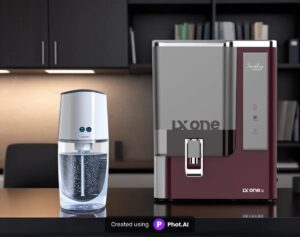
Branded RO Purifiers: These are units manufactured and marketed under established brand names (for example, companies featured in reviews of “best water purifier brands in India” The New Indian Express+1). They often come with standardised build quality, certifications, nationwide service networks and brand warranties.
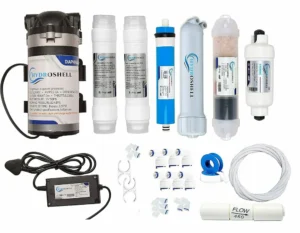
Assembled (or Local) RO Purifiers: These are systems built/assembled locally — either by small manufacturers or local vendors — using various components (membranes, filters, tanks) which may or may not carry the same brand name recognition. These may be marketed as “local RO”, “contract‑assembled RO”, or simply under less familiar names.
How They Are Similar (And the Core Technology)
At the heart both types perform the same key function:
- They use an RO membrane to reduce TDS (Total Dissolved Solids) and remove many dissolved impurities.
- They typically include pre‑filtration (sediment/carbon), the RO stage, and often a post‑filter or mineraliser depending on model.
- They require water input, electricity or pump (in many cases), space for the unit + tank, and regular maintenance.
So from a pure “filtration tech” viewpoint you’re getting the same principle. The difference comes in how reliably, how supported, and how cost‑effectively the system operates over time.
Key Differences: Branded vs Assembled
| Feature | Branded RO | Assembled RO (Local) |
|---|---|---|
| Up‑front Cost | Generally higher | Usually lower upfront cost |
| Warranty & Service Network | Stronger warranty + national service | Varies widely – dependent on local vendor |
| Spare Parts / Consumables Quality | Usually original/reliable parts (Pureit Water) | Parts may vary in quality |
| Build & Certification | Often certified, standardised build | May have less formal certification (CSE India) |
| Customisation / Flexibility | Less flexible (models fixed) | More flexible in component choice |
| Maintenance & Running Cost | Possibly higher (brand parts + service) | Potentially lower if local vendor |
| Risk & Long‑term Support | Lower risk – known brand track record | Higher risk if vendor disappears or parts unavailable |
| Trust & Brand Reputation | More trusted among many buyers | Depends heavily on local vendor’s credibility |
Why One Might Be Better Than the Other (Depending on Your Situation)
When to pick a Branded RO
- You prefer peace of mind: a recognised brand, standard warranty, nationwide service.
- Your water quality is challenging and you want high reliability.
- You are okay paying somewhat more for assurance.
- You are in a region where service access is important.
When an Assembled (Local) RO Can Make Sense
- You have a trusted local vendor who can service the unit, supply parts and install reliably.
- You want to save on upfront cost and are comfortable managing maintenance.
- You might want component customisation: selecting specific membrane brand, tank size etc.
What to Watch Out For Regardless of Brand
Whether you go branded or assembled, the following are essential:
- Check your input water quality / TDS (important to decide if you need RO, or what capacity).
- Verify that the RO membrane is rated for your TDS level and that pre‑filters and post‑filters are present.
- Ask about waste water / reject water ratio: RO systems waste a portion of water — good design reduces wastage.
- Confirm spare parts availability and service availability in your area.
- Check for certifications or compliance with standards (for example in India the standard Bureau of Indian Standards (BIS) for domestic RO systems) CSE India
- Ask about maintenance cost: filters, membranes etc, over say the next 2‑3 years Home Authority
- Make sure the installation is done properly (pressure, plumbing, tank/space) — even a branded unit will under‑perform with improper installation.
Final Verdict: Which One Should You Buy?
There’s no single “best” answer that fits everyone. Instead use this framework:
- If you prioritise reliability, ease of service, and brand support, then a branded RO is a wise choice.
- If you prioritise cost‑effectiveness, have a good local vendor, and are comfortable with servicing, an assembled RO can be a strong value proposition.
- Always match the system to your water source/quality, budget, maintenance willingness, and service ecosystem in your area.
- Avoid being influenced purely by price or brand name — take into account total cost of ownership (upfront + maintenance + parts + water wastage) + how the system will perform in your specific environment.