Before you buy any purifier, you need to know what the water entering your home is like. In the Nalasopara / Vasai‑Virar region, here’s what research shows:
- A groundwater study found that in the Vasai‑Virar area (which includes Nalasopara) the TDS (Total Dissolved Solids) during post‑monsoon was around 690‑1120 mg/L, and during pre‑monsoon about 740‑1400 mg/L. IJERT+1
- A survey reported that water contamination (including heavy metals, high TDS, etc) is “severely hit” in Mumbai suburbs including Nalasopara. The Times of India
- Local dealers note that RO + UV + UF + TDS controllers are frequently recommended in Nalasopara.
Choose the correct purification technology
ased on your water source and quality, pick the right tech. Here are quick rules:
- If your TDS is below about 300 ppm (mg/L) and no heavy contamination → UV/UF may suffice.
- If your TDS is very high (700‑1400+ as in your locality) or you have heavy metals / industrial contamination → RO + TDS controller + possibly UV/UF post‑treatment.
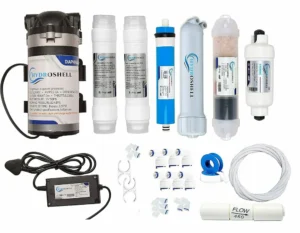
- Also check for additional features: sediment pre‑filter, activated carbon filter, mineraliser or TDS‑adjuster, reject‑water efficiency, storage tank, etc.
Checklist for your Nalasopara home:
- RO membrane rated for high TDS (1000+ mg/L)
- A TDS controller or mineral booster (to avoid water becoming too “dead” of minerals)
- UV or UV+UF stage (to handle microbial contamination)
- Reject water / waste water management (RO can waste water)
- Certified parts, reliable service support in your local area

Installation & maintenance: don’t skip these
Often people buy the purifier but neglect installation or maintenance — this impacts performance especially in high‑TDS areas like yours.
- Make sure the installer checks your input water TDS, and chooses correct settings.
- Ask where the reject (waste) water will go, and if you can reuse it (for plants/other purpose) to save water.
- Plan for filter/membrane replacement: RO membranes degrade faster in high‑TDS water. Keep a schedule.
- Get your service support set up locally (in Nalasopara West/East). rocareindia.com+1
- Clean your storage tank (if any) and ensure plumbing lines are hygienic.
- Monitor TDS of output regularly — some user forums point out that sometimes the TDS stays high or the system is mis‑installed
Final checklist: ask these questions before purchase
Here are questions you (or your customer) should ask the salesman/installer:
- What is the input TDS range this model is rated for?
- Does it include a TDS controller / mineraliser so that after RO removal water isn’t too “flat”?
- What is the waste water ratio (how many litres wasted per litre purified)?
- Where will reject water go in my home?
- What is the service support in Nalasopara / Palghar / Vasai‑Virar area?
- What is the warranty on membrane, pump, etc?
- How often will filters/membranes need replacement with our local water (tell them TDS ~700‑1400)?
- Can I get a demo of TDS before and after installation?
- If local vendor/assembled, ask about parts quality and availability.
Nalasopara / Vasai‑Virar
- Many houses here receive water from municipal supply and/or borewells — if you have a borewell supply, get that water tested too (borewell often has even higher TDS/hardness).
- During pre‑monsoon season TDS tends to go up (as per study ~740‑1400 mg/L). So when you buy, assume worst‑case TDS in sizing the system. IJERT
- Poor plumbing and storage tanks can cause contamination despite good purifier — make sure your overhead tank is clean, pipes aren’t rusting, and pre‑filters are in place.
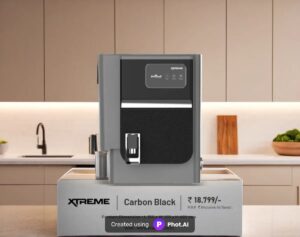
- Because space may be limited in flats or apartments in Nalasopara, choose a compact wall‑mounted model if needed.
- Check local power supply / pressure issues — some models need stable electricity, others built‑in booster pumps.